






Showing all 4 results
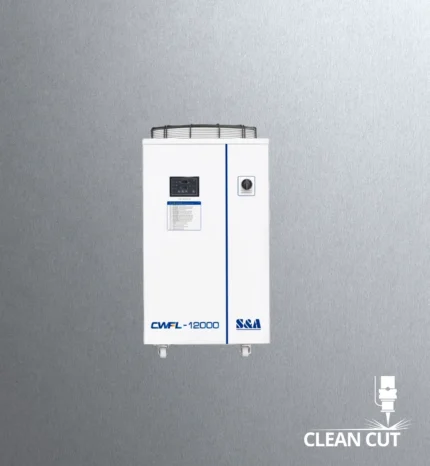


Today, chillers are widely used not only in commercial buildings and HVAC systems but also in factories, production lines, metalworking industries, laser cutting machines, and temperature-sensitive industrial equipment. Choosing the right chiller helps maintain standard operating temperatures, improve equipment performance, and reduce problems caused by excessive heat.
Contact us today to benefit from professional fiber laser cutting services or receive expert guidance on purchasing industrial laser cutting machines!
Paydar Borsh Asia, operating under the brand name Clean Cut, provides original and quality-guaranteed products and is a specialized supplier of laser welding machines and laser machine accessories in Iran. Clean Cut’s technical experts understand industrial requirements and help customers select the most suitable equipment and accessories for their specific projects.
Free Telephone Consultation
In this article, we will explore the different types of chillers, how they work, their industrial applications, and the key factors to consider when choosing one.
What Is a Chiller?
A chiller is a cooling device that uses a refrigeration cycle to absorb heat from water or another fluid and reduce its temperature. The chilled water is then circulated through pumps and piping systems to different pieces of equipment or sections of a facility, where it absorbs the heat generated during operation.
Simply put, a chiller supplies the cold water required for cooling systems and industrial processes.
One of the most important applications of chillers in industry is cooling equipment that generates considerable heat during operation. For example, in laser cutting machines, controlling the temperature of the laser source and other sensitive components is essential. Using a suitable cooling system helps maintain stable equipment performance.
How Does a Chiller Work?
A chiller operates based on heat transfer and a refrigeration cycle. In many vapor-compression chillers, a refrigerant is used as the primary fluid for absorbing and releasing heat.
The operating process generally consists of four main stages:
-
Evaporator: The refrigerant absorbs heat from the water or fluid, reducing its temperature.
-
Compressor: The refrigerant is compressed, increasing its pressure and temperature.
-
Condenser: Heat is transferred from the refrigerant to the surrounding environment, causing the refrigerant to condense into a liquid.
-
Expansion Valve: The refrigerant pressure is reduced, preparing it to enter the evaporator again.
This cycle continues continuously to maintain the fluid temperature within the required range.
Types of Industrial Chillers
Chillers are classified into different categories based on their heat rejection methods and cooling system designs. The two most common types are air-cooled and water-cooled chillers.
1. Air-Cooled Chiller
An air-cooled chiller uses ambient air to reject heat. In this system, fans move air across the condenser coils, allowing the heat from the refrigerant to be released into the surrounding environment.
Main features of air-cooled chillers:
-
No cooling tower required
-
Relatively simple installation and commissioning
-
Suitable for many industrial applications
-
Fewer auxiliary components related to the condenser water circuit
2. Water-Cooled Chiller
A water-cooled chiller uses a separate water circuit to transfer heat. In this system, water absorbs heat from the refrigerant in the condenser and usually transfers it to the environment through a cooling tower.
Main features of water-cooled chillers:
-
Suitable efficiency for high cooling capacities
-
Commonly used in large industrial facilities and plants
-
Requires auxiliary equipment such as a cooling tower
-
Requires maintenance and monitoring of the water circuit
Industrial Applications of Chillers
Due to their ability to control fluid temperatures, chillers are used in a wide range of industrial processes. Their most important applications include:
1. Laser Cutting Machines
Chillers are used to regulate the temperature of laser sources and sensitive machine components, helping prevent excessive heat buildup.
2. CNC Machines
They are used to cool spindles, oil, and other components that generate heat during operation.
3. Plastic Manufacturing Industries
Chillers help control the temperature of molds and equipment used in plastic injection molding processes.
4. Food and Pharmaceutical Industries
They are used to regulate the temperature of materials, storage tanks, and production equipment.
5. Printing and Packaging Industries
Chillers help control the temperature of certain machines and maintain suitable conditions throughout production processes.
Main Components of an Industrial Chiller
A chiller consists of several components, each performing a specific function in the cooling process.
|
Component |
Function |
|---|---|
|
Compressor |
Increases refrigerant pressure and temperature |
|
Condenser |
Releases heat from the refrigerant |
|
Evaporator |
Absorbs heat from the fluid and cools it |
|
Expansion Valve |
Reduces refrigerant pressure |
|
Pump |
Circulates fluid through the cooling circuit |
|
Temperature Controller |
Regulates and monitors system temperature |
What Is the Difference Between Industrial Chillers and HVAC Chillers?
Although both types of chillers provide cooling, they differ in their applications and operating conditions.
|
Comparison Criteria |
Industrial Chiller | HVAC Chiller |
|---|---|---|
|
Main Application |
Cooling industrial equipment and processes |
Building cooling |
|
Temperature Control |
Based on process requirements |
Based on thermal comfort conditions |
|
Connected Equipment |
Industrial machinery |
Air handling units and fan coil units |
|
Operating Conditions |
Depends on equipment heat loads |
Depends on building cooling loads |
Industrial chillers are generally designed to handle varying heat loads and specific process requirements. Therefore, selecting the right model should be based on the technical specifications of the equipment being cooled.
Important Factors When Choosing the Right Chiller
Choosing the right chiller directly affects cooling system performance and operating costs. Several important factors should be considered before purchasing a unit:
-
Cooling Capacity: The chiller’s capacity must match the amount of heat generated by the equipment.
-
Chiller Type: Air-cooled or water-cooled models should be selected based on environmental conditions, installation space, and available facilities.
-
Operating Temperature Range: The unit must be capable of maintaining the temperature required by the equipment.
-
Energy Consumption: Energy efficiency and electricity consumption are important factors in long-term operating costs.
-
Component Quality: The compressor, pump, heat exchanger, and control system should offer suitable quality and compatibility.
-
Maintenance and Support: Access to spare parts and reliable technical support should also be considered.
The Importance of Regular Chiller Maintenance and Servicing
Regular chiller maintenance plays an important role in maintaining cooling system performance. Dust accumulation on the condenser, low fluid levels, clogged filters, and pump malfunctions can reduce the efficiency of the unit.
To maintain proper chiller performance, the following components and conditions should be inspected periodically:
-
Compressor condition and performance
-
Cleanliness of coils and condenser
-
Level and quality of cooling fluid
-
Pump operation and water circulation
-
Connections and possible leaks
-
Sensors and temperature controller performance
Conclusion
A chiller is an essential component of industrial cooling systems. By reducing the temperature of water or other fluids, it enables machinery cooling and temperature regulation in various manufacturing processes. Chillers are widely used in industries such as laser cutting, CNC machining, plastics, printing, and food production.
Selecting the right chiller requires careful consideration of cooling capacity, equipment type, environmental conditions, and required operating temperature. Proper maintenance and regular servicing also help preserve efficiency and ensure reliable operation.
Clean Cut provides specialized information and equipment for industrial machinery and laser cutting applications. The company aims to help industry professionals better understand their equipment and choose the right components and accessories for their operational needs.