


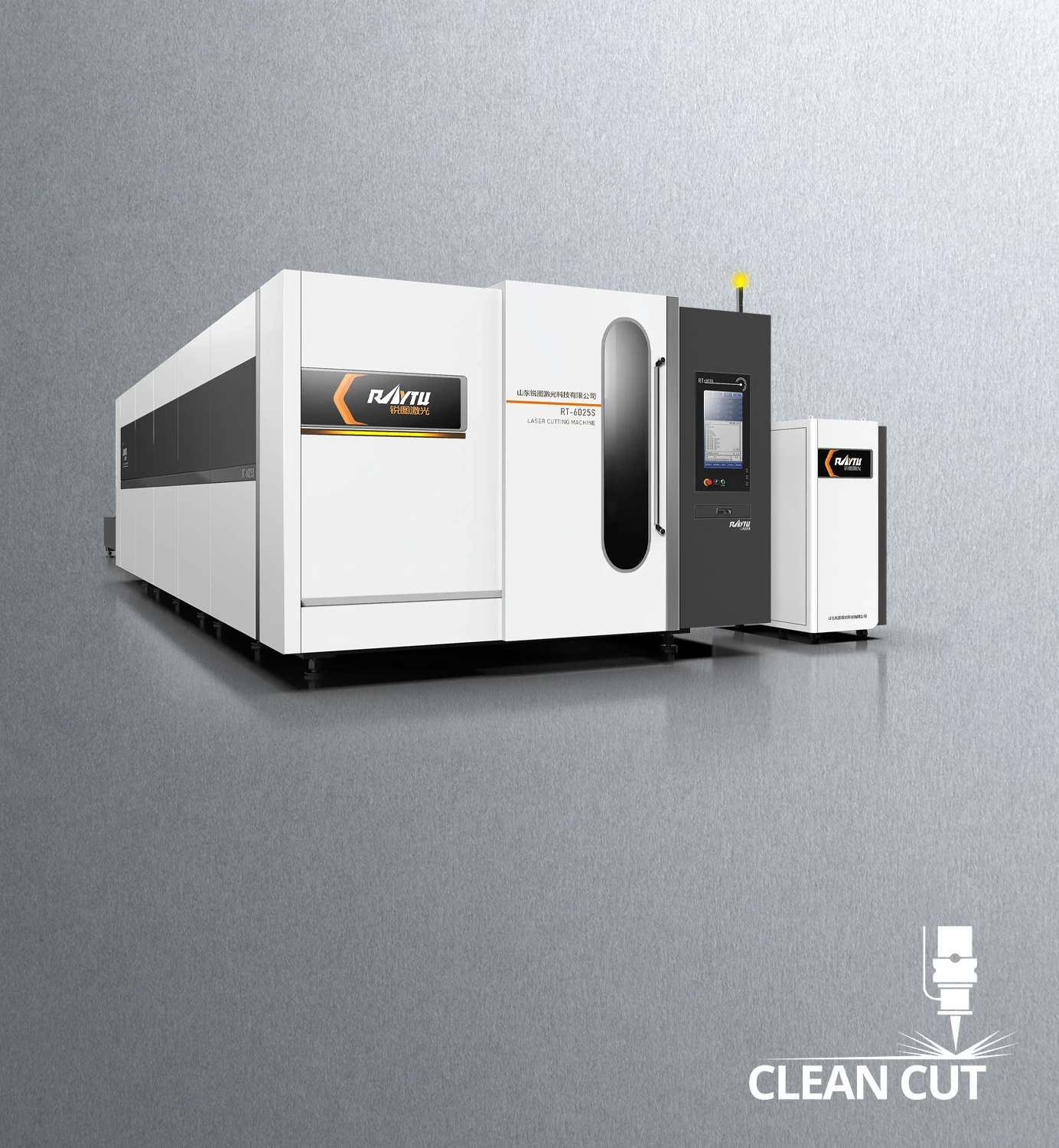
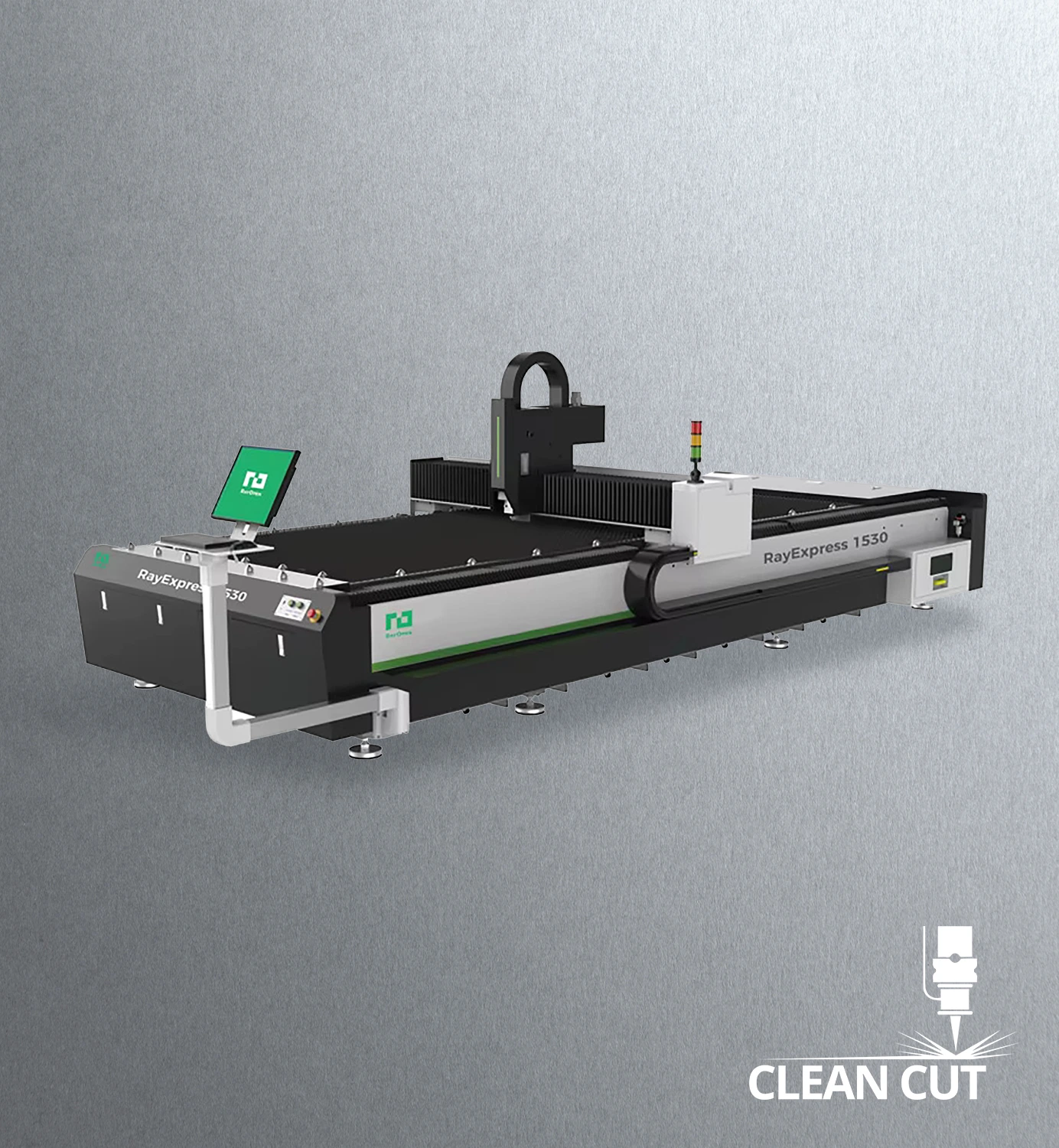
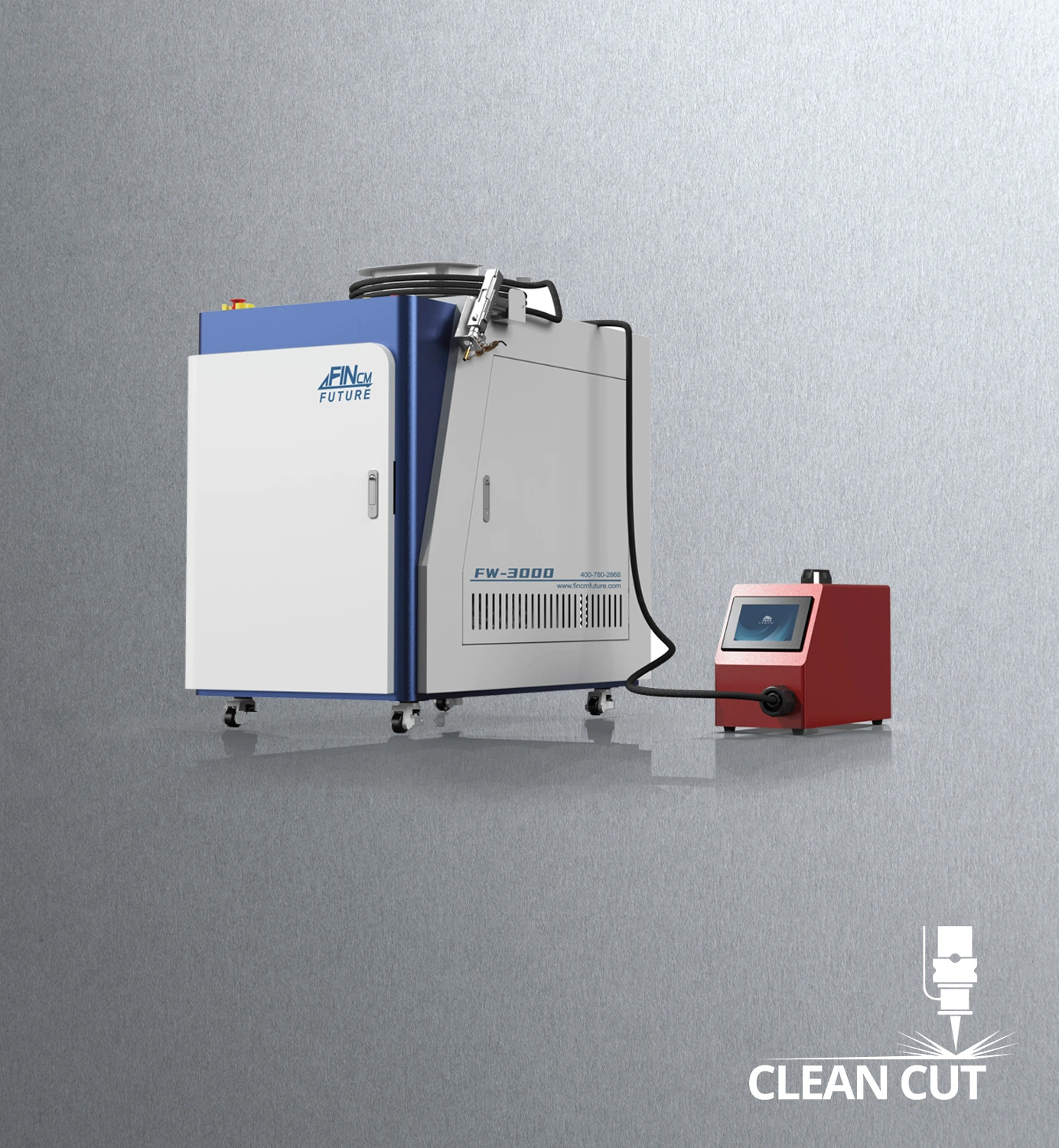
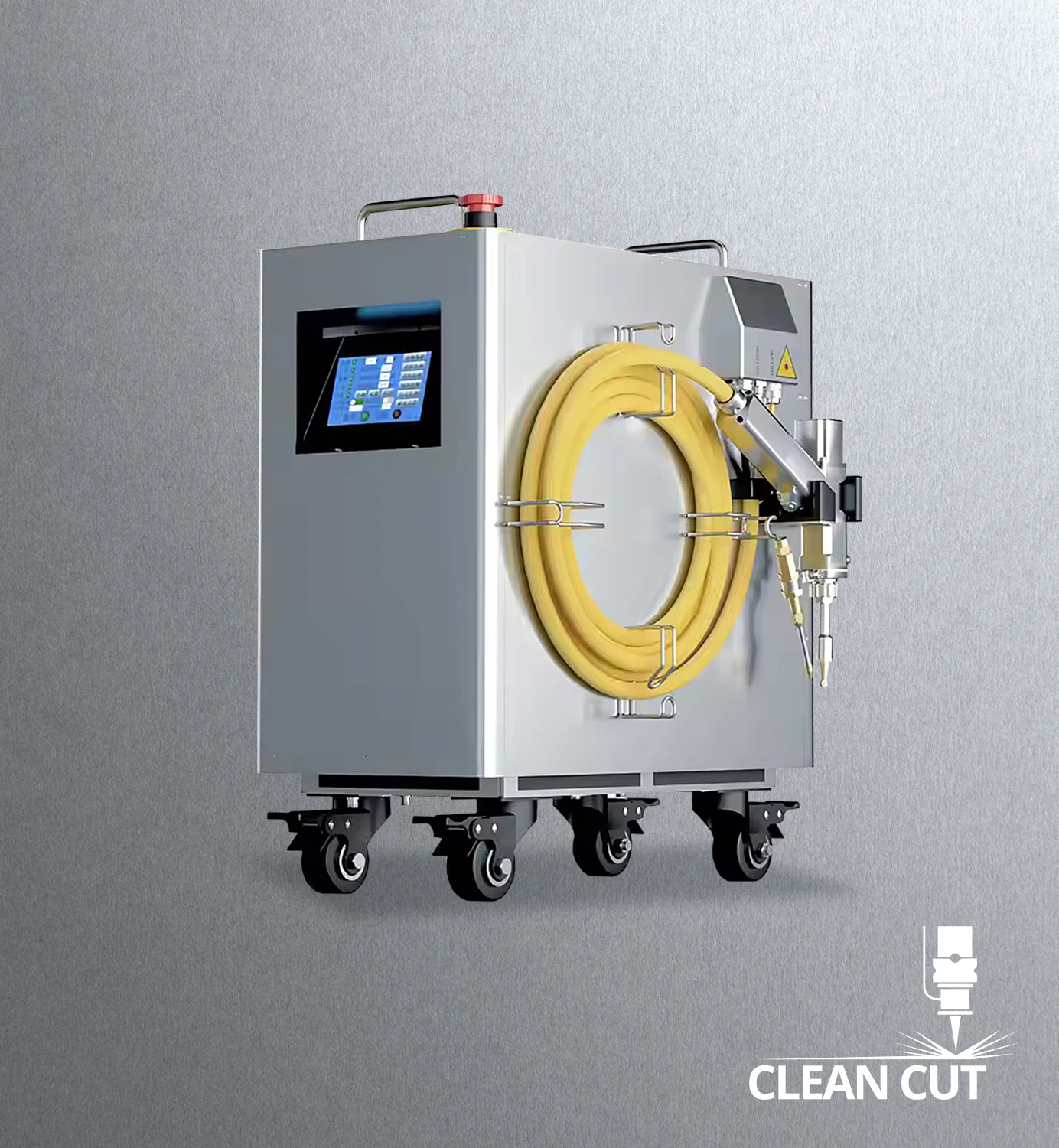




Showing all 4 results


Fiber Laser Cutting Machine for Sale: Latest Prices, Technical Specifications, and Buying Guide
If you are planning to buy a fiber laser cutting machine, you should evaluate the laser source power, sheet material and thickness, working table dimensions, production speed, and maintenance costs before choosing a model. Selecting the right machine can help increase productivity, improve part quality, and manage production costs
The price of a fiber laser cutting machine depends on factors such as the source brand and power, cutting head, CNC control system, motors and drives, chiller, table dimensions, and auxiliary equipment. Therefore, comparing machines solely by laser power or initial price is not enough to make an informed purchasing decision
Paydar Boresh Asia, operating under the brand name CleanCut, supplies fiber laser cutting machines and related equipment. This guide reviews machine types, the differences between single-table and dual-table models, factors that affect pricing, and important considerations before buying, helping you choose a machine that suits your productionrequirements
What Is a Fiber Laser Cutting Machine
A fiber laser cutting machine is CNC equipment used for precision cutting of metal sheets and parts. In this technology, a fiber laser source generates the laser beam, which is transmitted through an optical path to the cutting head. The beam is then focused on the metal surface to provide the energy required for cutting
The cutting head’s movement and cutting path are controlled by a CNC system based on a design file. To achieve the desired result, parameters such as laser power, cutting speed, focus position, nozzle type, and assist gas must be matched to the material and its thickness
Fiber laser cutting machines are used in a variety of industries, including parts manufacturing, metal equipment production, electrical enclosures, elevators, machinery manufacturing, and industrial component fabrication
When purchasing this equipment, assess the complete set of technical specifications. Higher power alone does not guarantee better cutting quality, lower costs, or greater productivity
Types of Fiber Laser Cutting Machines
Fiber laser cutting machines are available in different configurations based on table design, the type of workpiece, equipment level, and production capacity
Single-Table Fiber Laser Cutting Machine
On a single-table machine, sheet loading, cutting, and part unloading take place on the same table. This configuration is suitable for many metalworking workshops and production facilities with low to medium order volumes
Its advantages include
A simple, practical operating structure
Suitability for many general sheet-metal cutting jobs
The ability to choose power and table dimensions according to production needs
An option for businesses that do not require a table-exchange system
For specifications of available models, see the Economy Fiber Laser Cutting Machine page
Dual-Table Fiber Laser Cutting Machine
A dual-table machine, also known as an exchange-table machine, has two work surfaces. This allows a sheet to be prepared on one table while cutting takes place on the other. When aligned with the production schedule and loading time, this configuration can reduce downtime between operations
This type is generally suitable for facilities handling high order volumes or those seeking to reduce the waiting time associated with changing sheets
When choosing a dual-table machine, consider not only the laser source power but also the table dimensions, exchange mechanism, safety equipment, table-change time, and installation space
You can review model specifications on the Dual-Table Fiber Laser Cutting Machine page
Fiber Laser Tube and Profile Cutting Machine
For cutting round tubes, square and rectangular hollow sections, profiles, and other metal sections, a dedicated fiber laser tube-cutting machine is more suitable than a conventional sheet-cutting machine
When selecting this equipment, determine
-
The diameter or dimensions of the section to be cut
-
The maximum tube length and weight
-
The types of sections used
-
Whether angled cuts or complex designs are required
-
Production volume and expected speed
To review available options, visit the Tube Cutting Machine and 2D Tube Cutting Machine pages
Fully Enclosed Fiber Laser Cutting Machine
Fully enclosed machines have a protective enclosure around the cutting area. This design can help control laser-light exposure and manage smoke and particles generated during cutting. Actual performance, however, depends on the enclosure design, extraction system, and machine safety equipment
If workplace safety, contaminant control, and protective equipment are important to your facility, check the enclosure specifications, fume-extraction system, and applicable safety requirements before purchasing
Comparing Fiber Laser Cutting Machine Types
The following table provides a general comparison of machine types. Final specifications, available power options, and dimensions should be confirmed in the manufacturer’s catalog or the supplier’s quotation
| Machine type | Specifications to review | Suitable for |
|---|---|---|
| Economy fiber laser | Power, table dimensions, and basic equipment | Workshops and general production |
| Dual-table fiber laser | Power, dimensions of both tables, and exchange system | High-volume production |
| Fully enclosed fiber laser | Power, protective enclosure, and extraction system | Industrial facilities with specific safety requirements |
| Tube-cutting machine | Section diameter, tube length, and loading capacity | Tube and profile manufacturing |
| Combined sheet-and-tube machine | Sheet and section cutting capacity, machine configuration | Facilities that need both types of cutting |
Guide to Choosing Fiber Laser Cutting Machine Power
Laser source power is one of the most important selection factors. However, the appropriate power level must be determined by the material and its thickness, required edge quality, production speed, and order volume
1,500 W Fiber Laser Cutting Machine
This power level may be suitable for some light-duty applications and thin-sheet cutting. Its suitability depends on the metal type, thickness, required quality, and machine operating range
2,000–3,000 W Fiber Laser Cutting Machine
This power range is worth considering for many general-purpose sheet-metal cutting applications. Parts manufacturers, metal equipment producers, and businesses that fabricate components can evaluate these options based on their order profiles
4,000–6,000 W Fiber Laser Cutting Machine
Machines in this range may be suitable for applications requiring higher production speeds or the ability to cut thicker materials. The final result depends on the metal type, source quality, cutting head, assist gas, and process settings
8,000–12,000 W Fiber Laser Cutting Machine
These machines are generally considered for industrial applications with higher production demands. At this power level, compatibility between the laser source, cutting head, motion system, chiller, electrical equipment, and factory infrastructure is particularly important
20,000 W and Higher Fiber Laser Cutting Machines
High-power machines are considered for certain specialized production lines and heavy-duty applications. Before selecting one, assess actual production requirements, capital investment, installation facilities, gas consumption, electrical infrastructure, and technical service capacity
Important: A single fixed chart cannot determine the cutting thickness for every machine. For an accurate selection, consult the manufacturer’s cutting chart for the relevant metal, required cut quality, and assist gas
How Much Does a Fiber Laser Cutting Machine Cost
The price of a fiber laser cutting machine depends on the machine model and its equipment package. As a result, one price cannot accurately represent all models. To obtain a current quotation, first determine the specifications of the machine you need
The main factors affecting the price include the following
Laser Source Power and Brand
The laser source is one of the machine’s key components. Its power, exact model, technical specifications, warranty terms, and available service all affect the choice and final price
Brands such as Raycus and MAX are used in the fiber laser equipment market. When comparing sources, check the exact model and its technical specifications rather than relying on the brand name alone
Working Table Dimensions
The table dimensions should match the size of the sheets you use. A larger table may be necessary for certain sheet sizes or greater production flexibility, but it also requires more installation space and may increase the investment cost
A common size for sheet-cutting machines is 1,500 × 3,000 mm. Available dimensions should be confirmed for the specific machine model
Laser Cutting Head
The cutting head focuses the beam and helps establish the conditions required for cutting. The head model must be compatible with the source power and the intended application
Build quality, focus-adjustment capabilities, monitoring features, and access to consumable parts are important factors when comparing cutting heads
For related products, visit the Laser Cutting Machine Head page
CNC Control System
The controller executes the cutting path and coordinates axis movements. Software features, operator usability, compatibility with machine equipment, and the functions required by the production line should be reviewed before purchasing
Related products are available on the Laser Cutting Machine Controller page
Motors and Drives
The quality of the motion system and its compatibility with the controller affect positioning accuracy, motion stability, and machine performance. Motor and drive specifications should match the mechanical structure and the expected performance level
Chiller and Cooling System
The laser source and associated components require a cooling system that meets their technical specifications. The supplier should confirm the chiller capacity, operating-environment requirements, and compatibility with the machine’s equipment
For related equipment, visit the Laser Machine Chiller page
Table Type and Auxiliary Equipment
Whether the machine has a single or dual table, a full enclosure, a loading system, fume extraction, or other auxiliary features can affect the final cost
Installation, Training, and After-Sales Service
The purchase price is only one part of the total investment. Transportation, installation, commissioning, operator training, consumable supplies, and potential repairs should also be included in the budget
Is a Raycus or MAX Laser Source Better
Raycus and MAX are well-known brands in the fiber laser source sector. The choice between them should be based on the exact model, required power, technical specifications, and support conditions
When comparing these options, review
-
Rated power and the source model’s specifications
-
Compatibility with the machine’s cutting head and controller
-
Warranty terms and technical support
-
Availability of parts and repair services
-
Suitability for the materials being processed and production volume
Therefore, it is not possible to declare one brand better for every application without identifying the specific models and operating conditions. Obtaining complete machine specifications and comparing equipment at a similar level is a more reliable way to decide
Is a Single-Table or Dual-Table Machine Better
The choice between a single-table and dual-table machine depends on production volume, sheet-change time, and capital cost
If your order volume is limited and sheet loading does not take up a significant portion of operating time, a single-table model may be the more economical choice
By contrast, if you have continuous production and loading and unloading cause considerable downtime, a dual-table model may help improve productivity
For a more informed decision, compare actual cutting time, sheet-change duration, labor costs, daily order volume, and the price difference between the two models
Which Industries Use Fiber Laser Cutting Machines?
Depending on their technical specifications and configuration, fiber laser cutting machines are used in a range of industries, including
-
Metalworking and parts manufacturing
-
Stainless-steel equipment production
-
Electrical panels and metal enclosures
-
Elevator manufacturing
-
Medical equipment and related components
-
Automotive manufacturing and parts production
-
Industrial equipment manufacturing
-
Oil, gas, and petrochemical industries
-
Decorative and advertising metal components
-
Tube and profile manufacturing
The machine type, power, and auxiliary equipment should be selected according to the requirements of each industry
Which Metals Can a Fiber Laser Cutting Machine Cut
Fiber laser cutting machines can be used to cut various metals. However, cutting capability and quality for each material depend on machine power, material thickness, process settings, and the equipment being used.
| Material | Key selection consideration |
|---|---|
| Carbon steel and iron | Thickness, speed, and assist-gas type |
| Stainless steel | Edge quality, thickness, and surface appearance |
| Aluminum | Machine specifications and material-appropriate settings |
| Copper | Source and cutting-head capabilities and process conditions |
| Brass | Thickness and cutting settings |
| Galvanized sheet metal | Cut quality, surface coating, and fume management |
To determine the machine’s actual capacity, review the manufacturer’s cutting chart and request a sample cut using the material and thickness you intend to process
What Should You Consider Before Buying a Fiber Laser Cutting Machine
Before placing an order, review the following points
Material Type and Thickness
Identify the metals you process and the thickness range that accounts for most of your production. Choose a machine based on actual orders rather than only the maximum thickness stated in advertising
Sheet and Working Table Dimensions
The table should accommodate the sheets you use. Also consider installation space, the route for loading sheets, and the area needed to unload finished parts
Production Volume and Required Speed
Review the number of parts required per shift, design complexity, and loading time. This information helps determine whether you genuinely need higher power or an exchange table
Complete Equipment Specifications
Obtain the exact models of the laser source, cutting head, controller, motors and drives, chiller, and motion system in the supplier’s quotation
Additional Costs
Include installation, electrical infrastructure, fume extraction, assist gas, consumable parts, and maintenance in your purchasing budget
Installation and Operator Training
Before purchasing, clarify which installation, commissioning, training, and handover services are included
After-Sales Service and Consumable Parts
Review warranty terms, technical response times, spare-part availability, and how consumables will be supplied
Cutting Tests
If possible, provide a sample of the material and thickness you use for a cutting test. Assessing edge quality, dimensional accuracy, and actual speed can help you make a better choic
Why Buy a Fiber Laser Cutting Machine from CleanCut
Choosing a supplier that can clearly provide the machine’s technical specifications and required equipment is important when making a purchase
CleanCut operates in the fiber laser cutting machine and related equipment sector. To review products and select a machine that suits your production needs, use the following pages
Before purchasing, request confirmation from the sales team regarding the selected model’s specifications, included items, installation and training arrangements, and after-sales service commitments
Request a Quote and Buy a Fiber Laser Cutting Machine from CleanCut
To obtain the latest price for a fiber laser cutting machine, prepare some basic information about your production needs before contacting the supplier
-
Metal type and sheet thickness
-
Dimensions of the sheets you use
-
Daily or monthly production volume
-
Whether you need to cut sheets, tubes, or both
-
Required power and features
Providing this information makes it easier to compare suitable options and receive a technical proposal tailored to your needs
Contact us today to learn more about fiber laser cutting services or get guidance on choosing an industrial-precision laser cutting machine
Paydar Boresh Asia, operating under the CleanCut brand, supplies original, quality-assured products and serves as a specialist source for laser welding machines and other laser machine accessories in Iran. CleanCut’s technical specialists can help you choose equipment and accessories suited to the requirements of your project
Free telephone consultation
You can also view the Fiber Laser Cutting Machine Catalog
Conclusion
When buying a fiber laser cutting machine, consider a range of factors together, including sheet material and thickness, table dimensions, laser source power, cutting-head type, control system, table configuration, and after-sales service
A single-table machine can be suitable for many workshops, while a dual-table model may offer advantages for high-throughput production lines. If a significant part of your work involves cutting tubes and profiles, you should choose a dedicated machine or an appropriate combination model
CleanCut offers a range of fiber laser cutting machines, from economical single-table models to dual-table and tube-cutting machines, and can guide you toward a machine suited to your production requirements. Before making a final decision, compare technical specifications, additional costs, and support terms, and, where possible, test the machine using your actual material
Frequently Asked Questions About Buying a Fiber Laser Cutting Machine
How much does a fiber laser cutting machine cost
The price depends on the source power and brand, table dimensions, cutting head, controller, motors and drives, chiller, auxiliary equipment, and installation services. To obtain the current price, request a quotation for the specific model from CleanCut’s sales team
What is the best power rating for a fiber laser cutting machine
The appropriate power depends on sheet material and thickness, production speed, cutting quality, and order volume. Review the manufacturer’s cutting chart and your actual production requirements to make an informed choice
Which metals can a fiber laser cutting machine cut
Depending on its specifications, a fiber laser cutting machine can be used to cut carbon steel, stainless steel, aluminum, copper, brass, and some coated sheets. Cutting capacity for each material depends on machine power and process conditions.
What is the difference between single-table and dual-table fiber laser cutting machines
On a single-table machine, loading and cutting take place on the same table. A dual-table machine allows a sheet to be prepared on one table while cutting takes place on the other, potentially reducing downtime between operations
Is a Raycus or MAX laser source better
The choice between Raycus and MAX should be based on the exact model, power, technical specifications, compatibility with the machine’s equipment, and after-sales support. Neither brand can be considered the best for every application without comparing specific models
Can a fiber laser cutting machine cut tubes and profiles
Some machines are specifically designed for tube and profile cutting, while certain combination models can cut both sheets and metal sections. Check the machine’s dimensional capacity and features before purchasing
What should I consider when buying a fiber laser cutting machine
Important factors include sheet material and thickness, table dimensions, laser source power, cutting-head model, CNC controller, motors and drives, chiller, installation costs, operator training, and after-sales service
Does the machine’s price depend only on laser source power
No. Table dimensions and configuration, cutting head, control system, auxiliary equipment, cooling system, installation, and support services can also affect the final price