






Showing all 5 results




Choosing the right nozzle depends on several factors, including the machine type, material and sheet thickness, assist gas, and cutting conditions. Using an unsuitable or damaged nozzle can reduce cutting quality, cause burr formation, and lower machine efficiency.
In this article, we will explore laser cutting nozzles, their types, applications, and important tips for selecting and maintaining them.
What Is a Cutting Nozzle?
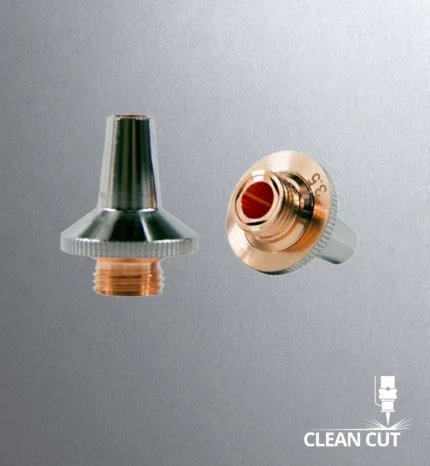
A cutting nozzle is a component typically installed at the end of a laser cutting head. Its primary function is to direct and control the flow of assist gas. In laser cutting machines, the laser beam generates heat to melt or vaporize the targeted section of metal, while the assist gas helps remove molten material from the cutting path.
By creating a controlled gas flow around the laser beam, the nozzle provides suitable conditions for the cutting process. Therefore, manufacturing quality, orifice diameter, geometric design, and nozzle condition can all affect machine performance.
What Are the Applications of Laser Cutting Nozzles?
Laser cutting nozzles are used in various industries that rely on metal-cutting equipment. Their most important applications include:
-
Metal Sheet Cutting: Used in laser cutting machines to process steel, stainless steel, aluminum, and other metal sheets.
-
Automotive Industry: Helps produce accurately cut metal components used in vehicle bodies and automotive parts.
-
Construction Industry: Used in manufacturing metal components, steel structures, and construction equipment.
-
Machinery Manufacturing: Supports the production of metal parts and components required for industrial machinery.
-
Signage and Metal Decoration: Helps manufacture decorative metal products and components with various shapes and intricate details.
-
Medical Equipment Manufacturing: Used in producing certain precision metal components according to specific manufacturing requirements.
Types of Laser Cutting Nozzles
Laser cutting nozzles are classified according to their structure, orifice design, and assist gas requirements. Each type is designed for specific cutting conditions and applications.
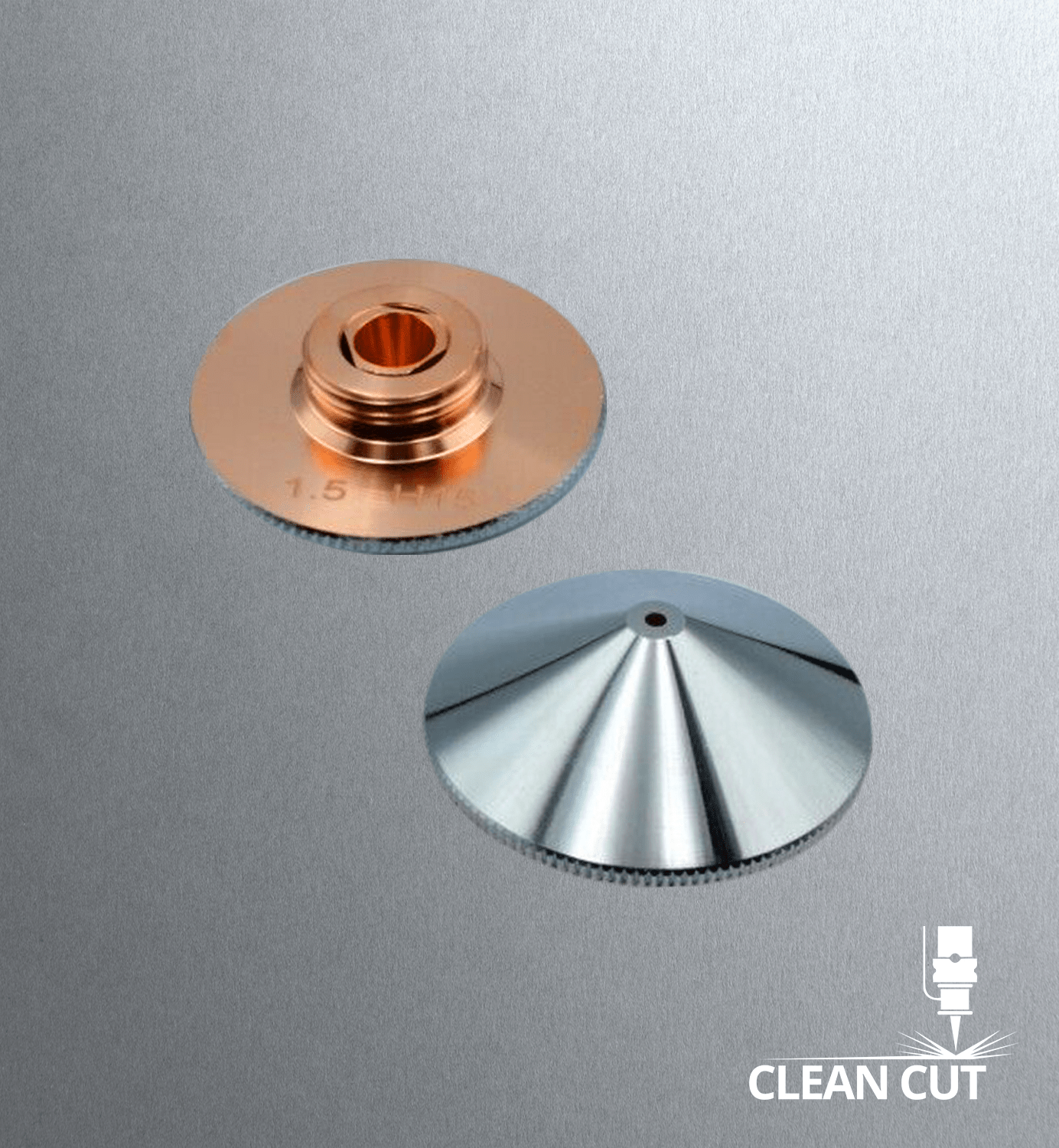
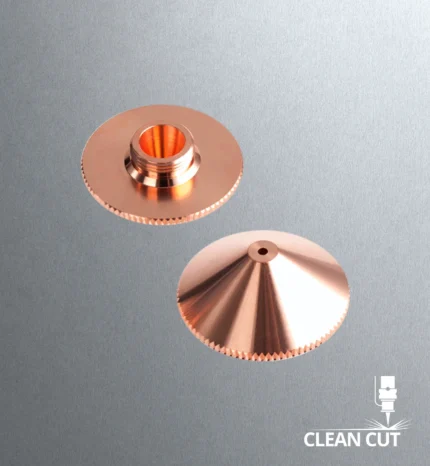
1. Single-Layer Nozzle (Single Nozzle)
This type of nozzle has a single main gas passage and is commonly used in cutting processes involving nitrogen or compressed air. It is suitable for cutting stainless steel, aluminum, and certain other metal sheets.
2. Double-Layer Nozzle (Double Nozzle)
This nozzle features a dual-layer structure and is used in certain oxygen-assisted cutting processes, particularly when cutting carbon steel.
3. E-Type Nozzle
This model is designed for specific high-power cutting applications and is used in oxygen-assisted carbon steel cutting processes.
4. Beam Nozzle
This type of nozzle is used in certain nitrogen-assisted cutting processes requiring high gas flow rates, particularly when processing thicker stainless steel and aluminum sheets.
Note: Nozzle types and their applications vary depending on the cutting head model and machine specifications. The final selection should always follow the manufacturer’s recommendations.
What Materials Are Laser Cutting Nozzles Made Of?
Laser cutting nozzles are generally manufactured from copper and copper alloys. These materials are widely used because of their excellent thermal conductivity and suitability for producing precision components.
When selecting nozzle materials, factors such as heat resistance, manufacturing quality, orifice accuracy, and compatibility with the cutting head are important.
Key Features of a High-Quality Cutting Nozzle
When choosing a suitable cutting nozzle, several important characteristics should be considered:
-
Dimensional Accuracy: The nozzle orifice should have precise and consistent dimensions.
-
Internal Surface Quality: A smooth internal surface helps maintain uniform gas flow.
-
Heat Resistance: The nozzle should maintain stable performance under operating conditions.
-
Cutting Head Compatibility: Its dimensions and connection type must match the cutting head model.
-
Gas Flow Quality: Proper nozzle design helps create a stable gas flow in the cutting area.
How to Choose the Right Laser Cutting Nozzle
Selecting the appropriate nozzle is one of the factors that can improve cutting quality and reduce machine operating costs. The following factors should be considered:
-
Material Type: The sheet material, such as iron, stainless steel, or aluminum, affects nozzle selection.
-
Sheet Thickness: Material thickness influences the required nozzle size and type.
-
Assist Gas Type: Using oxygen, nitrogen, or compressed air can determine which nozzle is suitable.
-
Laser Machine Power: The laser source power and cutting conditions are important factors when selecting a nozzle.
-
Cutting Head Model: The nozzle must be compatible with the cutting head in terms of dimensions, thread type, and structure.
When Should a Laser Cutting Nozzle Be Replaced?
Like other consumable machine components, cutting nozzles may become worn or damaged through continuous use. The following signs may indicate that the nozzle needs inspection or replacement:
-
Deformation or damage to the nozzle orifice
-
Scratches or contamination around the gas outlet
-
Reduced cutting edge quality
-
Increased burr formation or molten material remaining along the cutting path
-
Unstable gas flow during the cutting process
However, poor cutting quality is not always caused by nozzle damage. Other factors, such as protective lens condition, machine settings, gas pressure, and focal position, should also be checked.
Conclusion
A laser cutting nozzle is an essential component that directly contributes to the performance of laser cutting machines. Its primary function is to direct assist gas and help remove molten material from the cutting path. This component is widely used in industries such as automotive manufacturing, construction, machinery production, and metal fabrication.
Choosing the right nozzle based on material type and thickness, assist gas, laser power, and cutting head model can improve cutting quality, reduce material waste, and increase production efficiency. Regular inspection and timely replacement are also important for maintaining optimal machine performance.
In this regard, CleanCut provides laser cutting machine equipment and related components to meet the needs of metalworking professionals. Choosing compatible, high-quality components plays an important role in maintaining machine performance and improving cutting quality.